

When Is It Time for In-Home Care? – Frequently Asked Questions

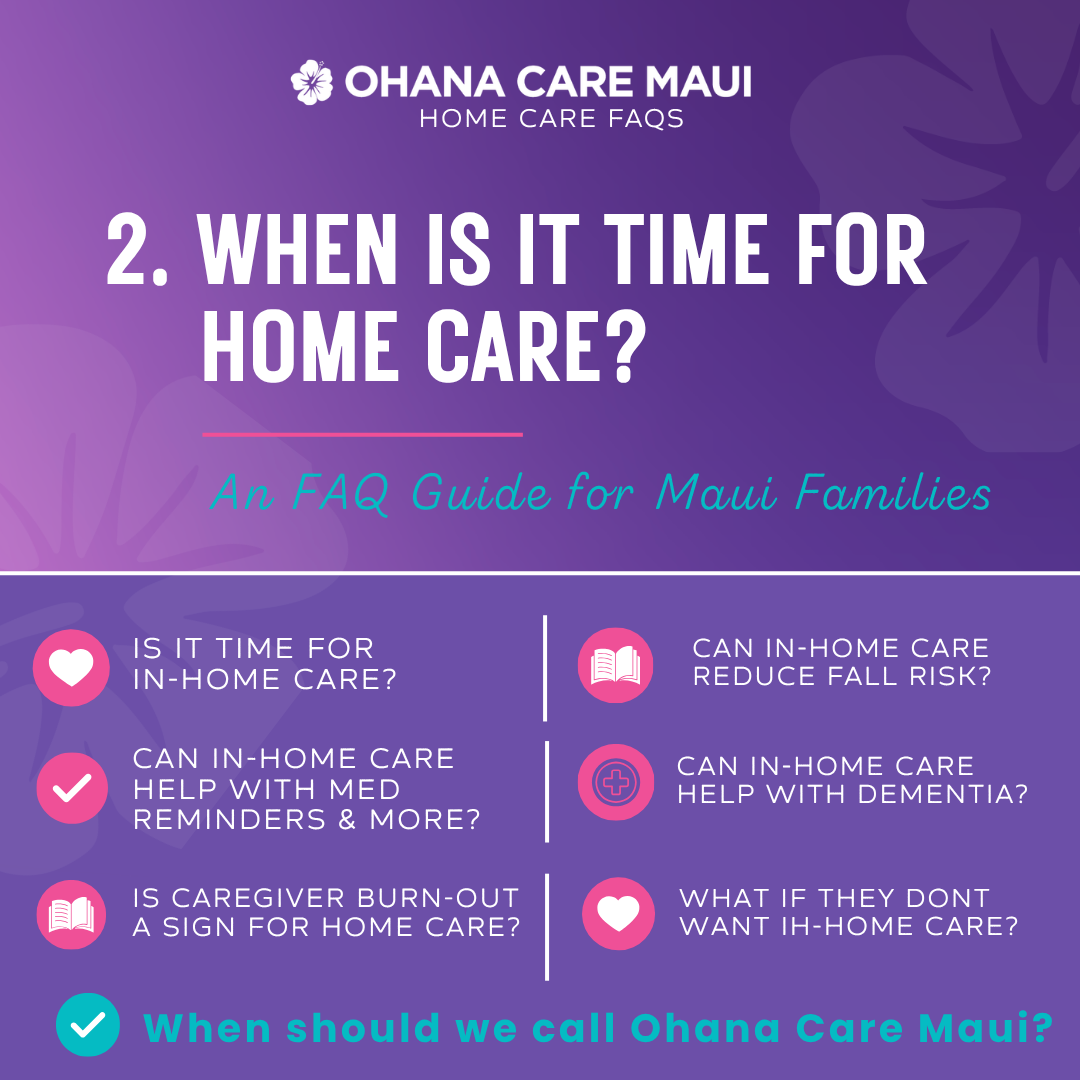
When Is It Time for In-Home Care?
Learn The Signs Families Should Look For – Frequently Asked Questions.
Families often begin considering In-Home Care after noticing small changes that gradually become harder to ignore.
Maybe a parent has fallen, medications are being missed, meals are becoming inconsistent, memory problems are increasing or a family caregiver is becoming exhausted.
One change does not necessarily mean a loved one needs professional care. But, when several concerns begin happening together or safety becomes an issue, it may be time to explore additional support.
This FAQ covers 7 Important Questions to ask yourself to help you recognize some of the most common signs.
7 Questions to ask Yourself
1: How Do I Know If It’s Time For In-Home Care?
It may be time to consider In-Home Care when everyday life at home becomes more challenging, less safe and more stressful for your loved one or the family members who help them.
Some Common Warning Signs can include:
-
- Bathing less often, changes in personal hygiene or grooming
- Trouble getting dressed, repeatedly wearing the same clothing
- Difficulty with cooking, cleaning & doing household chores
- Home is no longer being maintained
- Missed meals, spoiled food or unexplained weight loss
- Leaving the stove or oven on after cooking
- Memory changes, repeated questions or increased confusion
- Missed medications or confusion about medication schedules
- Missed medical appointments
- Falls, near-falls, a fear of falling, unexplained bruises
- Increased weakness, poor balance or unsteady walking
- Difficulty getting into or out of bed, chairs, the shower or the car
- Unpaid bills or unopened mail
- Increased isolation, loneliness and less interest in favorite hobbies
- Family caregivers feel exhausted, overwhelmed or worried all the time
Having Just One of These Signs doesn’t always mean someone needs daily care.
But, it is a good time to start a discussion when several changes begin showing up together or there is a serious safety concern.
Remember to be patient and have empathy. Try to focus on what matters most to your loved one instead of what they can no longer do.
Ask questions like:
“What has become harder lately?”
or
“What kind of help would make it easier for you to keep doing the things that are important to you?”
For some families, beginning with only a few hours of assistance each week makes the transition easier and allows everyone time to become comfortable with having help at home.
The right Home Care Agency will answer all your questions, discuss the type of support that may be helpful and direct families toward other medical or community resources when appropriate.
Learn More From Ohana Care Maui:
Additional Trusted Resource:
2: Can In-Home Care Help Reduce Risk Of Falls?
Yes. In-Home Care can help reduce many “everyday” fall risks and provide additional support for someone whose mobility or balance has changed.
The Centers for Disease Control and Prevention identifies falls as a leading cause of injury among older adults. Falls can happen for many reasons, including muscle weakness, balance problems, medications, vision changes, unsafe footwear and hazards around the home.
No caregiver or service can prevent every fall but a Home-Safety Assessment, medical evaluation and the right level of daily support can help protect their safety, confidence and independence.
A Home Care Agency can help:
-
- Provide a Home-Safety Assessment before care starts
- Identify fall hazards like loose rugs, poor lighting, electrical cords
- Assist with walking and mobility
- Help with transfers between the bed, chair, toilet or wheelchair
- Assist with bathing and showering
- Encourage safe, physical activity & movement
- Reminders to use a walker, cane or other prescribed mobility device
- Keep pathways free of clutter
- Keep frequently used items within easy to reach
- Provide supervision during activities that can be higher risk
- Bring home hazards to the family’s attention – ie: poor lighting, loose rugs or unsafe footwear
- Notice & report to the family – any new weakness, dizziness, balance problems or changes in mobility**
**If your loved one has fallen, has repeated near-falls or develops new dizziness, weakness or balance problems, a healthcare professional should evaluate possible medical causes.
A little extra help can make a big difference in your loved ones safety and confidence at home!
Learn More From Ohana Care Maui:
Fall-Prevention Resources:
3: What If My Loved One Is Forgetting Medications?
Difficulty keeping track of medications can be an important sign that an older adult may need extra support at home & possibly a medical review.
Medication management is recognized by healthcare professionals as an important part of helping older adults remain safe at home. ~ National Institute on Aging
Medication mistakes can happen for many reasons, including memory changes, complicated schedules, vision problems, difficulty reading labels, too many medications to track or even difficulty opening containers.
If medication mistakes become frequent, don’t ignore them. Consider the following and then take action if mistakes become more frequent.
Reasons For Medication Mistakes:
-
-
- Confusion about medication schedules
- Difficulty reading labels
- Memory changes
- Vision problems
- Too many medications to keep track of
- Difficulty opening medication containers
-
Warning Signs Include:
-
-
- Missed or skipped doses
- Double dosing
- Running out of prescriptions unexpectedly
- Expired medications
- Trouble remembering what medications have already been taken
-
For many Home Care clients, a simple medication reminder from their caregiver can help them stay on track.
Home Care providers should always stay within your loved one’s Care Plan and the services the agency is permitted to provide.
When medication needs are more complicated, a physician, pharmacist, nurse or other healthcare professional should be actively involved.
Remember – some medications and combinations of medications can contribute to confusion, dizziness or memory problems in older adults.
Never stop or start a medication without first speaking with the prescribing healthcare provider.
Learn More From Ohana Care Maui:
Additional Trusted Resource:
4: Can In-Home Care Help After Surgery Or A Hospital Stay?
Yes. Short-term In-Home Care can be especially helpful after surgery, illness, an injury, a fall or a hospital stay.
Coming home can be a relief, but the first days and weeks of recovery are usually when someone needs extra help with everyday activities
A Nurse Aide can provide practical support while you or your loved one follow the recovery plan provided by their healthcare team.
Short-term Care can give your loved one the support they need, ensure their recovery stays on track and give family the peace of mind they need.
A Nurse Aide may assist with:
-
-
- Meal preparation and hydration
- Bathing and dressing
- Getting safely in and out of bed or a chair
- Walking and mobility
- Toileting
- Medication reminders
- Grocery shopping and errands
- Light housekeeping and laundry
- Hydration and regular meals
- Transportation or accompaniment when included in the care plan
- General safety and supervision
-
They can remind and encourage the client to complete the prescribed exercises as directed by the physician or therapist. An In-Home Caregiver does not replace a Physical or Occupational Therapist and should not independently prescribe or change rehabilitation exercises or medical treatment.
Short-term care can be especially valuable when family members work, live off-island, have physical limitations of their own or simply cannot provide all the hands-on care needed during recovery.
Some people need help for only a few days. Others benefit from several weeks of assistance before returning to their normal routine.
The Goal Is Simple: The right amount of everyday support to recover safely and comfortably at home while following the care and rehabilitation plan established by their healthcare providers.
– Learn More From Ohana Care Maui:
– Additional Trusted Resource:
5: Is Caregiver Burnout A Sign That It’s Time For Professional Help?
It definitely can be.
Ongoing caregiver exhaustion, stress and a lack of time to care for your own health are important signs that more support is probably needed.
Caregiving can be meaningful and rewarding, but it can also become physically and emotionally demanding. Especially when one person is trying to manage most or all of the care for the loved one.
Many family caregivers experience Caregiver Burnout… a state of exhaustion that can leave even the most upbeat person feeling drained, anxious, resentful and burned out.
Signs a family caregiver may need more support:
-
- Ongoing physical or emotional exhaustion
- Trouble sleeping
- Feeling constantly worried or overwhelmed
- Irritability, frustration or resentment
- Missing work or important responsibilities
- Withdrawing from friends, hobbies or normal activities
- Neglecting personal medical appointments or health needs
- Feeling like there is never a safe time to step away from caregiving
Do not wait until a caregiver is completely exhausted and feeling totally burned out.
* Important Reminder – Getting help does not mean the family has failed. Professional respite or Companion Care gives family caregivers the time they need to save their health!
They must be able to rest, work, run errands, attend appointments, travel or simply spend time with their loved one without being responsible for every care task.
The Goal? To create a safer and more sustainable support system for both the person receiving care and the family members who care for them.
Maui also has local Caregiver Support Groups and Aging-Resource Programs that families can use along with their professional Home Care options.
Learn More From Ohana Care Maui:
Trusted Caregiver Resources:
6: What If My Loved One Or Parent Does Not Want Help?
This is very common! Many older adults worry that accepting help means they will lose their independence or control of their life.
Follow the Steps Below for better success:
– A slow and thoughtful approach to this topic works better than being blunt and to the point. Start a conversation and simply talk with them to help reduce their fears and learn why they might resist having help.
-Do not begin the conversation with “You need a caregiver.”
Begin by asking questions like
“What has been harder for you lately?
or
“What kind of help would make it easier for you to keep doing the things that matter most?”
-Then, Listen carefully and with an open heart.
Your loved one may be worried about:
-
-
-
- Having a stranger in the home
- Losing independence
- Loss of privacy
- The Cost of care
- Being treated differently
- Admitting that something has changed for them as they age
-
-
-Stay calm and Think about what you would want if the situation was reversed.
-Try positioning In-Home Care as a way to support their independence, not try to take it away. You can Call It ‘Temporary Care’ and test it out on a trial basis.
Remember, starting small can make trying Home Care easier to say ‘yes’ to!
-Begin with a few hours a week for errands, meals, housekeeping or companionship – that can feel much less overwhelming and easier to agree to.
As they adjust to the additional assistance, it will become easier to increase the amount of care as it is needed.
Learn More From Ohana Care Maui:
Additional Maui And Aging Resources:
7 – When Should We Call Ohana Care Maui?
Don’t wait for an emergency to start asking questions about In-Home Care!
If you start to wonder if additional help might be needed, it’s probably time to learn more about In-Home Care!
It’s probably time to learn more if you are asking yourself questions like:
-
-
- Is Mom safe living alone?
- Is Dad eating enough?
- Are medications being taken correctly?
- Is my spouse at risk of falling?
- Is bathing or getting dressed becoming more difficult?
- Are memory changes beginning to affect their safety?
- Do we need help after surgery or a hospital stay?
- Am I becoming exhausted as a family caregiver?
- Can I safely leave my loved one alone?
- Could a few hours of help each week make our everyday lives easier?
- I live off-island – How can I make sure my loved one has the support they need?
- Do we need temporary care for a loved one while visiting Maui?
-
Take The First Step – A simple conversation with a licensed Home Care Agency can help you understand what type of care is needed and the best place to start.
They can also share Local Maui Resources to help you decide if other medical or community services could be helpful.
*At Ohana Care Maui, we are happy to answer your questions, explain care options and guide you to the right resources and services.*
You do not have to have everything figured out before you call!
Sometimes the first step is simply talking through what is happening and learning what options may help!
Are You Ready to Learn More?
Call us with your questions and to discuss possible care options – We’re here to help guide you to the best options for you and your family.
✨ Still Not Sure Where to Begin? ✨
Every family’s situation is different.
At Ohana Care Maui we are happy to answer all your questions about In-Home Care, discuss your family’s specific needs and help you understand which services or community resources may be the best fit you.
Sometimes you know help is needed right away. Or maybe you just started to explore your options for Home Care. Either way, learning what support options are available can make your next step feel so much easier!
-
-
-
- For More Information on related topics, click below:
-
-
✅ Understanding in-Home Care
✅ Choose Your Home Care Agency Wisely
✅ In-Home Care or Assisted Living: Which One is Best?
* The information in this blog is for educational purposes only and cannot replace a recommendation from your healthcare professional.*
Join us at our monthly Ohana Care Speaker Series for Maui seniors and family caregivers for more practical education about aging, safety, caregiving and senior resources.
Sign Up Here: Ohana Care Speaker Series
Ohana Care Maui 🌺 Exceptional Care You Can Count On.
Supporting Residents & Visitors With Exceptional Care, Education, & Compassion for over 12 years.
Call Today for Customized, Free In-Home Care Consultation
“From respite care to bedbound care and everything in between —
including Dementia/Alzheimer’s, Hospice Support & Vacation Care”
24/7, Island-wide Services / Hawaii Licensed Home Care Agency
808-344-1285
OhanaCareMaui.com

Related posts


When Is It Time for In-Home Care? – Frequently Asked Questions

Understanding In-Home Care – Frequently Asked Questions

