

Hearing Loss and Brain Health: 5 Things Older Adults & Families Should Know

Balance Problems in Seniors
Age-Related Hearing Loss and Brain Health
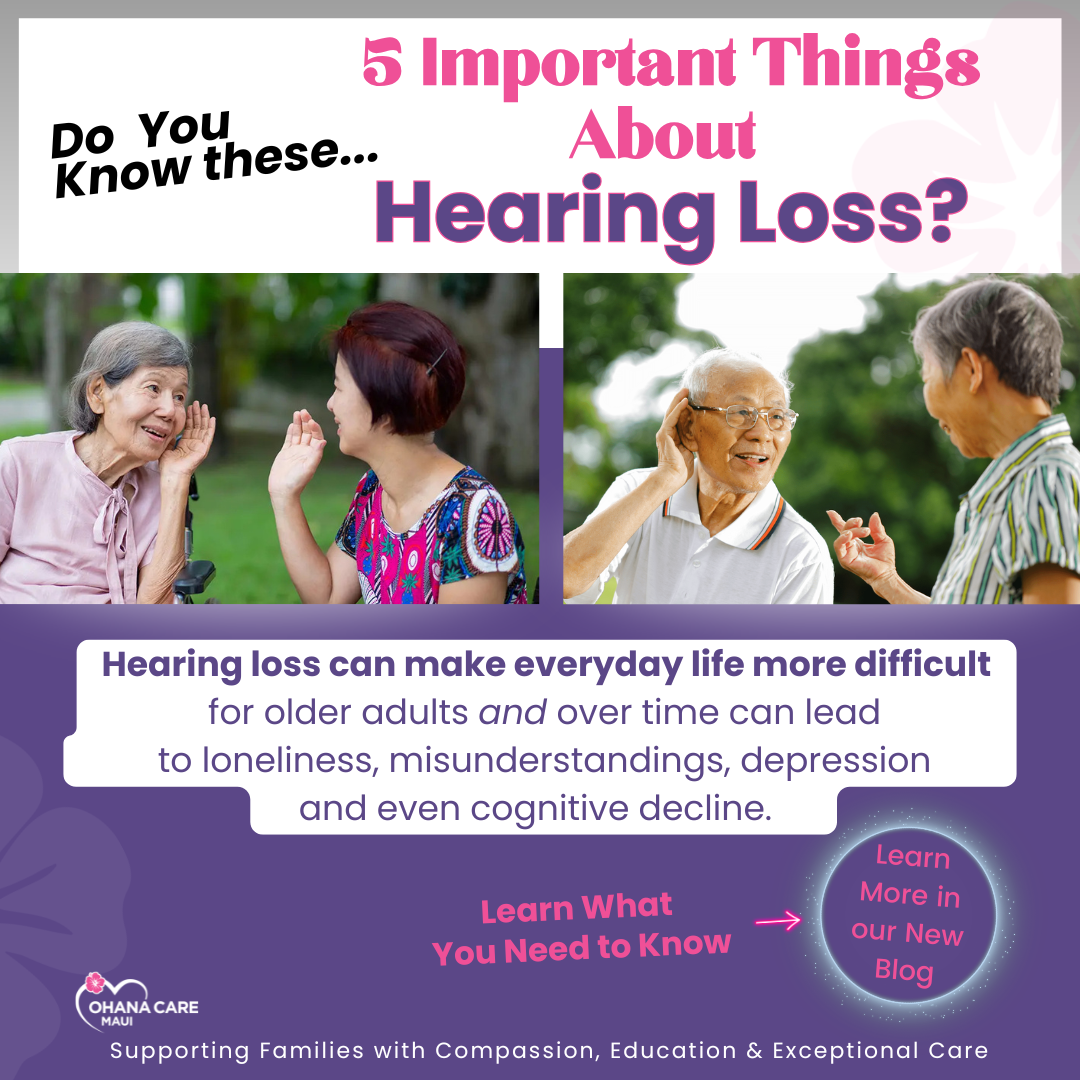
5 Things To Know.
Have you noticed an aging parent, spouse or loved one saying “What?” more often?
Maybe they turn their TV up, miss parts of conversations or have a harder time following a conversation in a restaurant, at a family gathering or in other noisy places…?
Changes in our hearing can make everyday life more difficult and affect conversations, relationships, safety, confidence and even our brain health.
Age-related hearing loss, also called presbycusis, is the gradual loss of hearing. It is very common as people grow older. It can make speech harder to understand, especially in noisy environments.
When untreated, hearing difficulties may contribute to social isolation, make it harder to follow conversations, and reduce quality of life.
Research has associated hearing loss with a greater risk of cognitive decline. A hearing evaluation can help determine the cause and identify appropriate support.
“… about 1 in 3 adults ages 65 – 74 has hearing loss,
and nearly half of adults over age 75
have difficulty hearing.”
National Institute on Deafness and Other Communication Disorders
➡️ Today, we’ll review:
-
-
-
-
-
-
- Why Hearing Loss Matters
-
- 5 Important Things You Need To Know
-
- Steps To Take If You’re Concerned
-
- What If A Loved One Doesn’t Want Help
-
-
-
-
-
Let’s Get Started!
✨Why Hearing Loss Matters
When Hearing Loss is not addressed, older adults may begin to avoid social situations because following along with conversations becomes too difficult.
Family members can also become frustrated when they have to repeat themselves over & over, which can increase family stress – especially if that person is already experiencing caregiver burnout.
Over time, Hearing Loss can lead to loneliness, misunderstandings, depression and cognitive decline.
“Imagine not being able to hear your friends anymore. Not being able to watch movies if you can’t hear the dialogue… or listen to your favorite music. That’s the world that older adults start to experience.”
Dr. Rehan Aziz, MD, Psychiatry/Neurology
✨5 Things to Know
1. Don’t Wait To Get Your Hearing Checked!
-
- Our hearing is not just about our ears – our brain must process what we hear to understand what the sounds represent or mean.
-
- When hearing becomes more difficult, the brain must work harder to process speech and follow conversations.
-
- Over time, not being able to hear clear sounds may weaken the brain’s ability to recognize and interpret speech efficiently.
Researchers are continuing to study how increased listening effort, reduced social interaction and changes in brain stimulation may relate to cognitive decline.
“Hearing loss is probably one of the most disabling symptoms that older adults can experience because it does cause so much isolation.”
2. Untreated Hearing Loss can Affect Memory & Thinking
-
- Hearing Loss affects much more than conversations.
However, Hearing Loss does not automatically mean that someone will develop dementia! Hearing loss and dementia are not the same condition. * Learn more about the difference between dementia and Alzheimer’s disease.
-
- Research has not proven that Hearing Loss can directly cause dementia but hearing loss is considered an important and modifiable risk factor.
-
- Studies have found an association between hearing loss and a greater risk of cognitive decline and dementia.
However, hearing loss does not mean a person has dementia or will necessarily develop it.
“If you’re not hearing, input isn’t coming to that part of the brain, [and] that part of the brain can start to shrink,”
according to Dr. Rehan Aziz, MD, Psychiatry/Neurology
-
- Several factors may cause this cognitive decline: (experts are still studying the exact connection)
– Our brains need to work harder to understand speech:
When the sounds we hear are not clear, our brain uses extra energy to try and “fill in the missing information”. This leaves fewer mental resources available for our memory and other thinking tasks.
– People may become socially isolated:
Difficulty following conversations can cause older adults to avoid family gatherings, restaurants, classes or community activities. Less social interaction and mental stimulation may contribute to cognitive decline.
– Parts of the brain may receive less stimulation:
When our brain receives fewer sound signals, the brain areas involved with hearing and communication may become less active over time.
3. Your Doctor May Not Notice It – So Bring It Up!
-
- Hearing loss is often missed during regular medical appointments. If you’re concerned about your own hearing or a loved one’s, be sure to mention it to your Primary Care Provider.
-
- If needed, the next step will be a referral for an Audiology Evaluation or Hearing Exam. An Audiologist can perform a full hearing test to help determine the type and level of hearing loss.
4. Hearing Aids Are Helpful, But Not The Only Option
Over-the-counter hearing aids may be an option for adults with perceived mild-to-moderate hearing loss. They are not intended for children or for every type or severity of hearing loss.
-
- It can take a bit of time to get used to Hearing Aids and other devices.
So – the earlier we get help, the easier it may be for our brain to adjust to the hearing device!
-
- Hearing Aids can be very helpful, but they do require adjustments, regular maintenance and some time to get comfortable wearing them.
-
- Some older adults may have some difficulty using Hearing Aids.
Especially those with more advanced hearing loss or dementia, but there are other options.
-
- Hearing Aids & Other Hearing-Support Options:
For Example:
– Assistive devices for phones or TVs like Clarity or Hamilton CapTel
– Over-the-counter Hearing Aids for mild to moderate hearing loss
– Personal sound-amplification devices, such as a ‘Pocketalker’
– Visual or vibrating alert systems
– Better communication habits from family members and caregivers (see our tips below under Steps To Take)
-
- The best solutions depends on each person’s level of hearing loss, their memory, comfort and ability to use the device(s) consistently.
5. Avoid Shouting! It Usually Doesn’t Help
-
- Age-related hearing loss often affects higher-pitched sounds.
Higher pitched sounds can make speech sound unclear or distorted and not just quieter. That is why someone may say, “I can hear you, but I can’t understand what you’re saying.”
-
- Shouting usually makes the distorted sound louder – it does NOT make the words sound clearer.
Remember to speak clearly, slow down a bit, face the person directly and reduce background noise when possible.
✨Steps To Take If Concerned About Hearing Loss
Start with the Four (4) Steps below.
If you believe you, or a loved one, may be having trouble hearing. these steps can help make communication easier and less frustrating for everyone.
-
- Talk with a Primary Care Provider:
Ask your doctor to check for earwax, possible medication side effects, infections or other medical conditions that could affect hearing.
Sometimes something as simple as wax buildup can make hearing much worse.
-
- Schedule A Hearing Test:
A hearing test can show which sounds are difficult to hear and whether the hearing loss is mild, moderate, or severe.
This information can help guide you and your doctor to the next steps.
-
- Explore Hearing Support Options:
Depending on the person’s needs, your options may include: prescription hearing aids, over-the-counter hearing aids, assistive devices for phones and TVs or some simpler amplification tools.
-
- Change The Way You Communicate!
Families and caregivers can make a big difference by changing the way they communicate. *For those supporting someone with memory loss, you may find these tips for communicating with someone who has dementia or Alzheimer’s helpful.
Try these simple communication tips:
– Get the person’s attention before speaking.
– Face them directly.
– Make sure your face is well lit.
– Speak clearly and at a natural pace.
– Avoid shouting.
- Reduce background noise when possible.
– Do not speak while chewing or covering your mouth
– Choose quieter places for important conversations.
✨What To Do If They Don’t Want Help
-
- Older adults can find it difficult to talk about hearing loss. They may feel embarrassed, worry about looking older, believe hearing aids will not work or be concerned about the cost.
-
- Hearing Aids or support are not about getting older. It’s about staying connected, safe and involved in their daily life.
-
- A gentle, empathetic approach usually works better than telling them what they “need to do” or arguing with them. Try to focus on connection rather than correcting them.
For Example:
- “I want you to be part of the conversation.”
- “We miss hearing your thoughts.”
- “I think this could make family time easier for all of us.”
- “Let’s start by getting your ears checked.”
✨ A Helpful Reminder For All of Us
Hearing loss is not only a hearing issue…
It can affect our mood, memory, relationships, independence and our safety.
Do Not Wait until hearing difficulties become severe – get your hearing tested sooner rather than later.
The Good News?
You can:
-
-
- Begin regular hearing checks early and get a proper evaluation
-
-
-
- Get correctly fitted hearing aids or an assistive listening device.
-
-
-
- Stay socially connected – it can help protect your ability to communicate, keep your independence and potentially protect your overall brain health.
-
Addressing hearing changes is one part of a broader plan for healthier aging and maintaining independence.
✨Ohana Care Maui Perspective ✨
At Ohana Care Maui, we know how important communication is for safety, connection, independence, health and quality of life.
We believe aging well begins with
practical support, education, clear communication and helping families feel more confident every step of the way. This awareness alone can change outcomes for seniors and their families.
⬇️
Do you need extra support for yourself or an aging loved one at home?
⬇️
Ohana Care Maui provides compassionate In-Home Care Services for Maui seniors and families, including companionship, personal care, dementia care and help with everyday activities.
Call Us Today!
808-344-1285 or OhanaCareMaui.com
* The information in this blog is for educational purposes only and cannot replace a recommendation from your healthcare professional.*
Explore the Ohana Care Speaker Series for Maui seniors and family caregivers for additional practical education about aging, safety, caregiving and senior resources.
** Blog Sources:
**Adapted & rewritten using additional research from original work by Leslie Kernisan, MD MPH. Age-Related Hearing Loss – 4-2026 / The Lancet – August 10, 2024 / National Institute on Aging, Hearing Loss: A Common Problem for Older Adults– January 2023 / Dr. Rehan Aziz, MD, 2022
Ohana Care Maui 🌺 Exceptional Care You Can Count On.
Call Today for Customized, Free In-Home Care Consultation
From respite care to bedbound care and everything in between — including Dementia & Alzheimer’s.
24/7, Island-wide Services / Hawaii Licensed Home Care Agency
808-344-1285
OhanaCareMaui.com

Related posts



Understanding In-Home Care – Frequently Asked Questions


